A media kit should help a potential partner decide whether a conversation is worth continuing. It does not need to tell your entire story. It needs to show, with current evidence, who you reach, what you can produce, how a collaboration could work, and which commercial details still need agreement.
Direct answer: Build the media kit around five partner decisions: audience fit, editorial or brand fit, deliverable fit, evidence quality, and next steps. Give every metric a date and source, define each proposed deliverable, separate publishing from content-usage rights, and make it clear that availability, scope, fees, approvals, and final terms require a written agreement.
Start with the decision the kit must support
A media kit, partnership proposal, and contract serve different purposes. Combining all three into one document usually makes the first conversation harder rather than easier.
| Document | Question it answers | Typical contents |
|---|---|---|
| Media kit | Could this publisher, creator, or organization be a relevant partner? | Positioning, audience, channels, evidence, possible formats, inquiry process |
| Partnership proposal | What specifically could we do for this brief? | Campaign concept, selected deliverables, schedule, responsibilities, proposed fee |
| Written agreement | What has each party actually committed to? | Final scope, payment, approvals, disclosures, rights, cancellation, warranties and other terms |
If a potential partner has already supplied a detailed brief, a tailored proposal may be more useful than sending a general kit alone. The principles in the sales proposal template evaluation guide can help with that next-stage document.
A partner-first media kit structure
The strongest order is usually the order in which a reader evaluates the opportunity. Lead with relevance, support it with evidence, and postpone detailed commercial terms until the reader understands what is being offered.
1. Identity and positioning
Use the opening section to explain what you publish or produce, the audience context you serve, and the subjects or formats for which you are relevant. A useful positioning statement contains three parts:
- Subject: the topics, products, industries, locations, or communities you cover.
- Audience context: who uses the work and why they pay attention to it.
- Approach: the format, perspective, or editorial boundary that distinguishes the work.
Weak: “We create authentic lifestyle content for an engaged audience.”
More useful: “Deskwise Weekly publishes practical workspace and organization guidance for remote employees and small home-based businesses through a weekly email and short instructional videos.”
The second version gives a partner something concrete to assess. It does not make unsupported claims about trust, influence, or purchasing behavior.
2. Audience snapshot
Do not turn the audience section into a wall of large numbers. Select the facts that help a partner evaluate relevance. Depending on the channel, that may include:
- Audience location or market concentration.
- Platform-provided age ranges or professional categories.
- Subscribers, followers, unique visitors, downloads, or another clearly named measure.
- Typical reach, views, opens, clicks, replies, saves, or listening completion where available.
- Recurring audience interests or questions, provided they come from a documented source.
Every important figure should have four labels: metric, value, reporting period, and source. For example, “Average newsletter opens: [value], July–September 2026, email platform reporting” is more meaningful than an undated “high open rate.”
Keep unlike measures separate. Followers are not the same as unique reach; page views are not unique visitors; email opens are not link clicks; and impressions do not show that every person noticed or understood the content.
3. Channels and their roles
Explain what each channel is for instead of merely listing profile links. A newsletter might support detailed education, while a short-form video channel demonstrates a process and a website provides a searchable long-form reference. This helps the reader understand why a proposed format belongs on a particular channel.
If the newsletter is central to the offering, document its actual structure before selling a placement. The email newsletter template guide explains how to define sections, calls to action, and reusable content blocks.
4. Partnership formats expressed as deliverables
A label such as “Gold Package” tells the reader very little. Describe the work in operational terms. Each format should identify:
- The number and type of deliverables.
- Where each deliverable would be published or supplied.
- Approximate length, duration, or placement.
- What the partner must provide and by when.
- The expected production and review sequence.
- How many revision rounds are included, if any.
- Which rights, distribution methods, or production costs are not included by default.
For example, “one sponsored newsletter” is ambiguous. A more useful description is: “One sponsor message of up to [word count] words within one scheduled newsletter issue, including one supplied image and one tracked destination link, subject to editorial review and written approval of the final scope.”
5. Evidence and representative work
Use evidence that a reader can interpret without guessing. A representative example should state what was produced, where it appeared, when it appeared, and what the reported figure measures.
Be careful with case studies. A high-performing item is not automatically typical, and a result from one campaign does not guarantee the same outcome for another. If an example is unusually strong, identify it as a selected example rather than presenting it as an average.
Only include partner names, logos, campaign screenshots, private messages, testimonials, or results when you have permission to use them. Crop analytics screenshots to the necessary information and check for email addresses, account identifiers, customer comments, or other information that should not be distributed.
6. Commercial approach and inquiry requirements
You may publish starting rates, defined package prices, or no rates at all. The appropriate choice depends on how predictable the scope is.
| Approach | Useful when | Risk to manage |
|---|---|---|
| Starting rate | The base deliverable is consistent, but options vary. | Readers may assume the starting figure covers rights, rush work, travel, or complex production. |
| Fixed package | Deliverables, timing, revisions, and permitted use are genuinely standardized. | A package can become misleading if important exclusions are hidden. |
| Quote after brief | Production, distribution, rights, or exclusivity vary substantially. | The inquiry process may feel vague unless you list the information needed for a quote. |
A useful inquiry form or email request asks for the campaign objective, desired deliverables, target audience or location, proposed dates, budget range, review process, usage request, paid-media plans, exclusivity request, and the name of the decision-maker.
Treat rights as a scope question, not a footnote
Publishing content on your own channel is different from delivering content for a partner to reuse. Before quoting or accepting a brief, determine whether the partner is requesting any of the following:
- Organic reposting on the partner’s own channels.
- Use on a website, product page, email, marketplace listing, or event display.
- Paid advertising or promotion using the content.
- Advertising through the creator’s or publisher’s account.
- Editing, cropping, translation, adaptation, or creation of shorter versions.
- Raw files, unused footage, or editable source files.
- Use by affiliates, retailers, agencies, or other third parties.
- Category exclusivity or restrictions involving competitors.
- Use for a fixed period, a renewable period, or without a defined end date.
Do not let a broad phrase such as “full usage” substitute for a precise discussion. The channels, territory, duration, permitted modifications, paid distribution, sublicensing, attribution, and file delivery may all affect the work and the proposed fee.
Important: A media kit is not a contract or individualized legal advice. Intellectual property, licensing, advertising disclosures, privacy, account access, exclusivity, payment, cancellation, and approval terms should be addressed in an agreement appropriate to the project and jurisdiction. The freelancer contract template checklist provides a separate review framework for the agreement stage.
Build disclosure planning into the offer
If a collaboration will include an endorsement or sponsored message aimed at U.S. consumers, disclosure should be planned before production. Federal Trade Commission guidance says material connections can include payment, free or discounted products, employment, and personal or family relationships. It also advises placing disclosures where they are clear, understandable, and hard to miss rather than relying solely on a profile page, a buried hashtag, or a platform tool.
A media kit should not prescribe one disclosure phrase for every format. Instead, include a process note such as: “Sponsored work must include disclosures appropriate to the relationship, content format, audience, platform, and applicable requirements. Disclosure wording and placement will be confirmed during approval.”
This matters during scoping because disclosure treatment can affect scripts, on-screen text, captions, live segments, newsletter placement, and partner approvals. It should not be added as an afterthought once the content is complete.
Copy-ready media kit planning worksheet
Complete this worksheet before designing pages. The bracketed prompts can be copied into a document and replaced with verified information.
A. Cover and positioning block
Name or publication: [Name]
Version date: [Month day, year]
Primary channel: [Newsletter, website, podcast, video channel, social account, or other]
Contact: [Business inquiry email or authorized representative]
Positioning statement: [Name] publishes or produces [specific subject and format] for [defined audience context]. The work focuses on [two or three concrete themes] and is designed to help the audience [practical purpose].
Not a fit for: [Subjects, product categories, claims, or partnership formats you do not accept]
B. Audience evidence ledger
| Metric | Value | Period | Source and definition |
|---|---|---|---|
| [Example: newsletter subscribers] | [Verified value] | [As of date] | [Platform dashboard; active subscribed recipients] |
| [Example: average unique opens] | [Verified value] | [Date range and number of issues] | [Platform reporting; state whether privacy-related estimates affect the figure] |
| [Example: website unique users] | [Verified value] | [Monthly average and date range] | [Analytics system and metric definition] |
| [Example: audience location] | [Verified percentage or description] | [As of date] | [Named platform or first-party record] |
Evidence note: These figures describe the stated reporting periods and are not guarantees of future reach, engagement, clicks, leads, or sales.
C. Deliverable card
Format name: [Plain-language name, such as “Newsletter sponsor placement”]
Deliverable: [Quantity, format, approximate length or duration, and placement]
Published or delivered where: [Your channel, partner channel, or files supplied to the partner]
Partner inputs: [Brief, product, approved claims, links, brand assets, access, spokesperson, or other dependency]
Production sequence: [Brief received] → [concept or outline] → [draft] → [review] → [publication or delivery]
Indicative lead time: [Time needed after all required inputs are received]
Included revisions: [Number and meaning of a revision round]
Not included unless agreed: [Paid media, raw files, travel, reshoots, extra versions, translation, long-term use, exclusivity, rush work]
Availability note: Subject to brief review, scheduling, product suitability, and written agreement.
D. Rights request fields
- Publisher: [Who will publish the content?]
- Channels: [Exactly where may it appear?]
- Use period: [Start date, end date, and renewal process]
- Paid promotion: [Not requested / requested, with details]
- Editing permission: [None / resizing only / specified adaptations]
- Third-party use: [None / named parties and uses]
- Territory: [Where the permission applies]
- Exclusivity: [Category, named competitors, and period]
- Source files: [Not included / specified files]
E. Inquiry call to action
For availability and a scoped proposal, please send:
- [Campaign objective and product or service]
- [Requested deliverables and publication channels]
- [Target audience or geographic market]
- [Desired publication or delivery dates]
- [Budget range]
- [Required usage rights and paid-media plans]
- [Exclusivity request]
- [Approval contacts and deadlines]
Filled miniature example
Format: Deskwise Weekly sponsor placement
Deliverable: One 100–140 word sponsor message in the first half of one weekly email, with one supplied image and one destination link.
Process: Partner brief and substantiated product information due 15 business days before the proposed issue; draft supplied for factual and brand review; one consolidated revision round included.
Excluded unless separately agreed: A dedicated email, social posts, partner reuse, paid advertising, category exclusivity, custom photography, additional links, and additional revision rounds.
Evidence label: Newsletter figures are shown as averages for the six most recent regular issues and do not guarantee the performance of a future placement.
Next step: Send the proposed date, campaign objective, destination link, budget range, usage request, and approval contact to [inquiry email].
Turn the worksheet into a readable document
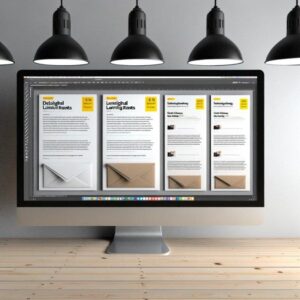
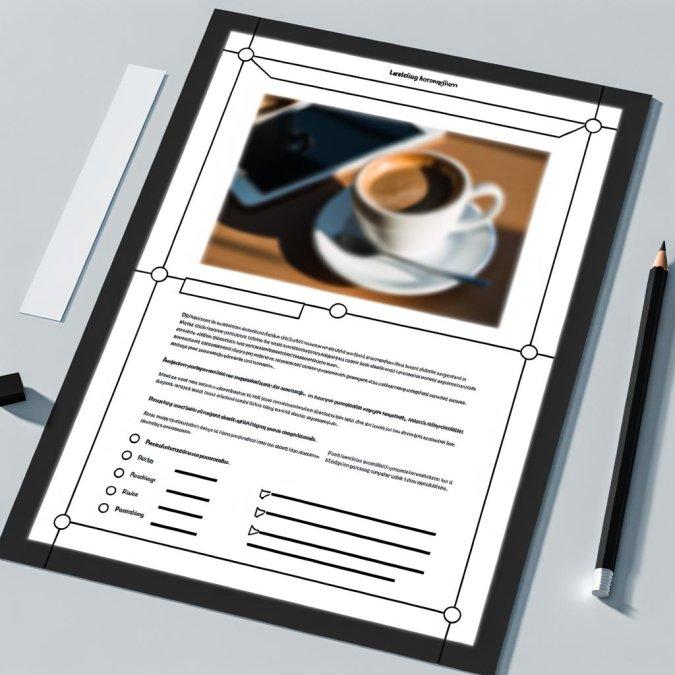
Once the information is complete, design the kit for scanning and forwarding. A practical sequence is:
- Page one: identity, positioning, audience relevance, key channels, and contact route.
- Page two: dated audience evidence with definitions and sources.
- Page three: two to four partnership formats described as deliverables.
- Page four: selected work or evidence, followed by the inquiry process and version date.
This is a starting structure, not a required page count. A specialist newsletter may need only two pages, while a publisher with several distinct channels may need more. Remove any section that does not help the recipient evaluate fit, evidence, scope, or the next step.
Use readable type, short paragraphs, descriptive headings, adequate contrast, and text labels rather than communicating essential information only through charts or images. Test the exported file on a phone and desktop. Confirm that links work, text is selectable, pages are not clipped, and the file name includes the publication or business name and version date.
A maintenance system for metrics and availability
A media kit becomes unreliable when its attractive layout hides stale data. Maintain a separate source sheet containing each displayed figure, its definition, the date retrieved, reporting period, source location, and the next review date. Update the kit from that record rather than from memory.
Review the document whenever a major channel, audience characteristic, contact, offer, rate, rights position, or availability rule changes. If partnership inventory depends on an editorial schedule, connect it to the planning process described in the maintainable content calendar guide.
Before sending the file, ask someone unfamiliar with the opportunity to read it briefly and answer four questions:
- Who is the audience?
- What can be commissioned?
- Which facts support the claims?
- What must the potential partner do next?
If those answers are unclear, simplify the wording or reorganize the evidence before adding more design elements.
Final pre-send review
- Positioning: Does the opening identify a specific subject, audience context, and approach?
- Currency: Does every important metric show a reporting period or as-of date?
- Definitions: Can the reader distinguish followers, reach, views, visitors, downloads, opens, and clicks?
- Evidence: Are averages labeled as averages and selected examples labeled as examples?
- Permissions: May you display every logo, name, quotation, screenshot, and previous result?
- Deliverables: Does each offer state quantity, channel, placement, dependencies, timing, and revisions?
- Rights: Are reposting, paid use, editing, source files, third-party use, duration, and exclusivity treated as separate scope questions?
- Commercial clarity: If rates appear, is it clear what they include and exclude?
- Disclosure planning: Does the workflow allow appropriate sponsorship or material-connection disclosures to be agreed before production?
- Next step: Does the document request the information needed to assess availability and prepare a proposal?
- File quality: Have you checked links, typography, page breaks, accessibility, mobile readability, file name, and version date?
Primary references for U.S.-facing sponsored content
These Federal Trade Commission resources explain endorsement and material-connection disclosure principles. They do not replace advice about a specific campaign, contract, jurisdiction, or platform.
- Federal Trade Commission: Disclosures 101 for Social Media Influencers
- Federal Trade Commission: Endorsement Guides — What People Are Asking
- Federal Trade Commission: Endorsements, Influencers, and Reviews
The useful test: A potential partner should be able to identify the audience, verify the basis of the main claims, understand the proposed work, spot the unresolved rights questions, and know how to request a scoped proposal. If the kit cannot do that, improve the information architecture before polishing the graphics.

AIM Solutions Editorial Team researches and maintains practical guides to business documents, workflows, and templates. Content is educational and does not claim personal testing, professional credentials, or individualized professional advice.